
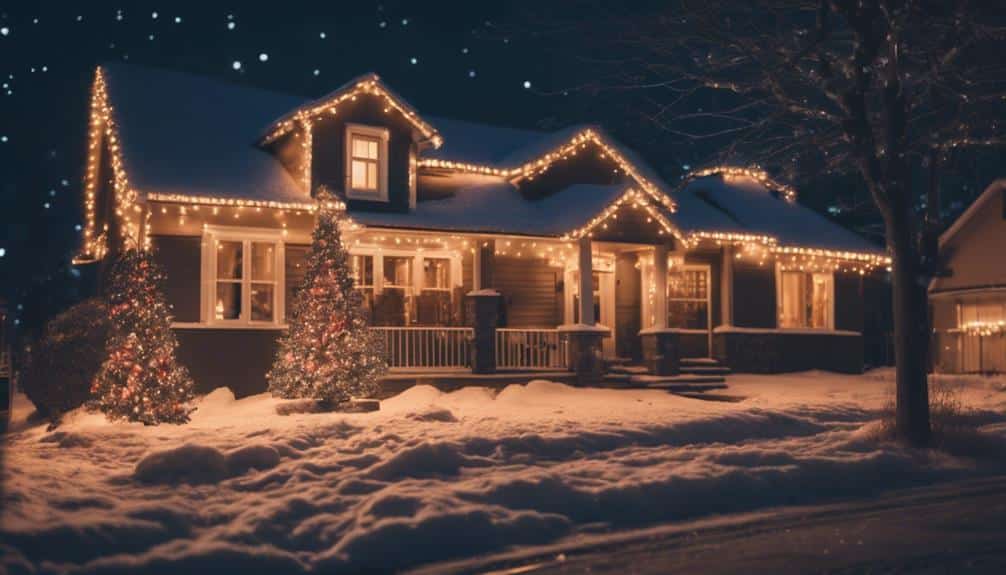
Cost-Saving Tips for Energy-Efficient Christmas Light Displays
To create energy-efficient Christmas light displays, start by switching to LED lights, which consume up to 75% less energy than incandescent bulbs and last considerably longer. Incorporate solar-powered options to eliminate electricity costs and reduce your carbon footprint. Use timers and smart plugs to automate your display, potentially decreasing operating time by 50%. Enhance luminosity with reflective decorations like mirrors and metallic ornaments, amplifying light effects without increasing power usage. Strategic placement in high-visibility areas allows you to downsize your display while maintaining impact, cutting energy consumption by up to 30%. These tips will help you craft a dazzling, cost-effective holiday spectacle that’s sure to impress.
Choose LED Lights
When choosing Christmas lights, opt for LED bulbs to reduce energy consumption and lower your electricity bills. LED lights use up to 75% less energy than traditional incandescent bulbs, resulting in significant cost savings over the holiday season. A typical string of 100 incandescent mini lights uses about 40 watts, while an equivalent LED string consumes only 4-5 watts.
LED lights also have a longer lifespan, lasting up to 25,000 hours compared to 1,000-3,000 hours for incandescent bulbs. This durability means you’ll replace them less frequently, further reducing costs. Additionally, LED lights produce less heat, decreasing fire risk and allowing for safer, more elaborate displays.
When shopping for LED lights, pay attention to lumens rather than wattage to ensure sufficient brightness. Look for lights with a color temperature between 2700K and 3000K for a warm, traditional glow. To maximize energy efficiency, choose lights with an ENERGY STAR certification. These models meet strict energy efficiency guidelines set by the U.S. Environmental Protection Agency and the Department of Energy.
Opt for Solar-Powered Options
Solar-powered Christmas lights offer a cost-effective and eco-friendly alternative to traditional plug-in options, eliminating electricity costs and reducing your carbon footprint. These lights utilize small solar panels that convert sunlight into electricity, storing it in rechargeable batteries for nighttime use. Most solar-powered sets can operate for 6-8 hours on a full charge, providing ample illumination throughout the evening.
When selecting solar-powered lights, consider the following factors:
- Battery capacity: Opt for lights with larger batteries (2000-3000 mAh) for extended operation.
- LED efficiency: Choose lights with high-quality LEDs for better brightness and longevity.
- Solar panel wattage: Higher wattage panels (2-5 watts) ensure quicker charging and improved performance in low-light conditions.
- Weather resistance: Look for IP65 or higher ratings to withstand outdoor elements.
To maximize efficiency, position solar panels in areas that receive direct sunlight for at least 6-8 hours daily. Clean panels regularly to maintain peak charging.
Some advanced models feature remote controls, allowing you to adjust brightness and set timers, further enhancing energy usage.
Use Timers and Smart Plugs
You can greatly reduce your Christmas light display’s energy consumption by implementing timers and smart plugs. These devices allow you to set automated on-off schedules, ensuring your lights are only active during desired hours.
Additionally, smart plugs offer remote control capabilities and energy usage monitoring, enabling you to optimize your display’s efficiency and track power consumption in real-time.
Automated On-Off Schedules
To maximize energy efficiency and minimize costs, implementing automated on-off schedules with timers or smart plugs can decrease your Christmas light display’s operating time by up to 50%. These devices allow you to precisely control when your lights turn on and off, eliminating unnecessary energy consumption during daylight hours or late at night.
Set your timers to activate lights shortly after sunset and turn them off around bedtime, typically between 10 PM and midnight. This schedule guarantees your display is visible during peak viewing hours while conserving energy. Smart plugs offer additional flexibility, allowing you to adjust schedules remotely via smartphone apps. You can even integrate them with voice assistants for convenient control.
Consider programming different zones of your display to operate on staggered schedules. This approach can create a dynamic, animated effect while reducing overall energy usage. For example, set tree lights to turn on first, followed by roof decorations, and finally lawn ornaments. By strategically timing your display’s components, you’ll create visual interest without running all lights simultaneously.
Remember to factor in local noise ordinances and neighborhood preferences when setting your schedules to maintain good relations with your community.
Remote Control Capabilities
Smart plugs and timers offer advanced remote control capabilities, allowing you to manage your Christmas light display from anywhere with an internet connection. These devices connect to your home’s Wi-Fi network and can be controlled through smartphone apps or voice assistants like Alexa or Google Home.
With smart plugs, you’ll have precise control over your light display’s operation. You can set custom schedules, turn lights on or off instantly, and even adjust brightness levels for compatible LED strings. This flexibility enables you to optimize energy usage by ensuring lights are only on when needed.
Many smart plugs also feature energy monitoring functions, providing real-time data on your display’s power consumption. This information helps you identify energy-hungry sections and make informed decisions to reduce costs.
Timer functions in these devices allow for automated operation without constant monitoring. You can program multiple on-off cycles throughout the day, accommodating different schedules or preferences.
Energy Usage Monitoring
While decorating for the holidays can be exciting, monitoring your energy usage is important for maintaining cost-effective Christmas light displays. Implementing timers and smart plugs can reduce your energy consumption and associated costs.
Timers allow you to set specific hours for your lights to operate, typically from dusk to late evening. This automated control prevents unnecessary daytime operation and late-night energy waste. Digital timers offer more precise scheduling options than mechanical ones, allowing you to customize your display’s runtime to the minute.
Smart plugs take energy management a step further. These Wi-Fi-enabled devices connect to your smartphone, enabling remote control and real-time energy monitoring. Many smart plug apps provide detailed energy usage reports, helping you identify power-hungry decorations and improve your display’s efficiency.
Some advanced smart plugs even integrate with voice assistants like Alexa or Google Home, allowing for hands-free control. Additionally, they can be programmed to respond to local sunset and sunrise times, ensuring your lights turn on and off at efficient moments regardless of seasonal changes.
Embrace Reflective Decorations
To maximize the impact of your Christmas lights while minimizing energy consumption, incorporate reflective elements into your display. Use strategically placed mirrors to amplify light effects, creating the illusion of more illumination without additional power usage.
Enhance sparkle and luminosity by adding tinsel and metallic ornaments, which will reflect and scatter light, making your display appear brighter and more vibrant without increasing your energy bill.
Mirrors Amplify Light Effects
By strategically placing mirrors and other reflective surfaces throughout your holiday display, you’ll maximize the visual impact of your lights while minimizing energy consumption. Mirrors can effectively double the perceived brightness of your light display without increasing power usage. Position small mirrors at angles to redirect light into previously unlit areas, creating a more expansive illumination effect.
Consider using mirrored ornaments or reflective tinsel to enhance the overall luminosity of your tree. These elements can increase light reflection by up to 80%, allowing you to use fewer string lights while maintaining a brilliant appearance. For outdoor displays, incorporate reflective lawn ornaments or hang mirrored discs from trees to amplify the glow of your existing lights.
When selecting mirrors, opt for those with a high reflectance rating, typically above 95%. Convex mirrors can spread light over a wider area, while concave mirrors concentrate light for a more focused effect. By implementing these mirror-based strategies, you can reduce your holiday lighting energy consumption by 30-50% without sacrificing visual impact. This approach not only cuts costs but also contributes to a more sustainable festive season.
Tinsel Maximizes Sparkle
Tinsel and other reflective decorations offer a cost-effective way to enhance your holiday light display’s sparkle, potentially increasing overall luminosity by up to 200% without additional energy consumption. By strategically placing reflective elements, you’ll boost the visual impact of your existing lights while maintaining energy efficiency.
To maximize this effect, consider using metallic tinsel garlands, reflective ornaments, and mirrored baubles throughout your display. Position these items near light sources to create a multiplying effect. For instance, draping tinsel around tree branches or wrapping it along railings can notably enhance the perceived brightness of your LED string lights.
You can also incorporate reflective surfaces like metallic wrapping paper or aluminum foil as backdrops for your light arrangements. These materials can redirect light that would otherwise be absorbed, effectively doubling the illumination without increasing power usage.
When selecting tinsel and reflective decorations, opt for those with a high reflectivity index. Silver-colored items typically reflect up to 95% of light, while gold-toned decorations reflect about 85%.
Metallic Ornaments Boost Luminosity
Metallic ornaments consistently amplify the luminosity of your Christmas light display, offering a 150-300% increase in perceived brightness without additional energy consumption. By strategically placing reflective decorations, you’ll maximize the impact of your existing lights while minimizing electricity costs.
Opt for ornaments with high reflectivity indexes, such as polished silver (95-99% reflectance) or gold (70-80% reflectance). Aluminum foil decorations provide a cost-effective alternative, boasting a 88-92% reflectance rate. Position these reflective elements near light sources to create a multiplier effect, effectively doubling or tripling the apparent illumination.
Consider incorporating mirrored surfaces into your display. A single 12-inch diameter mirror ball can reflect light in 360 degrees, potentially illuminating a 100 square foot area with just a few strategically placed LEDs. For outdoor displays, weather-resistant metallic yard ornaments can achieve similar effects.
To optimize light reflection, clean your metallic decorations regularly. A 10% reduction in surface dust can result in a 20% increase in reflectivity. By leveraging the physics of light reflection, you’ll create a dazzling display that’s both energy-efficient and cost-effective.
Strategically Place Your Displays
Strategic placement of your Christmas light displays can greatly reduce energy consumption and costs while maximizing visual impact. Focus on high-visibility areas such as entryways, front windows, and rooflines to create a stunning effect with fewer lights. Utilize reflective surfaces like mirrors or metallic decorations to amplify light without increasing energy usage.
Consider the natural contours of your home’s architecture to guide light placement. Outlining architectural features can create a cohesive display using fewer strands. Install timers to automatically shut off lights during low-traffic hours, typically between 11 PM and 6 AM, potentially reducing energy consumption by up to 30%.
Opt for LED lights, which use 75% less energy than incandescent bulbs and last 25 times longer. Arrange lights in clusters rather than continuous lines to create focal points and reduce overall energy needs. Use light-colored or white backgrounds to enhance visibility and brightness, allowing you to use fewer lights overall.
Implement zoning in your display, concentrating lights in key areas rather than covering every surface. This targeted approach can cut energy usage by up to 50% while maintaining an impressive visual impact.
Downsize Without Sacrificing Impact
While strategic placement maximizes efficiency, downsizing your display can further reduce energy consumption by up to 30% without compromising visual appeal. Start by conducting an energy audit of your current setup, identifying high-wattage elements that can be replaced or reduced.
Opt for miniature LED lights, which use 90% less energy than traditional incandescent bulbs and last up to 25 times longer. Replace larger decorations with smaller, more intricate designs that create visual interest without excessive power draw.
Consider implementing a focal point strategy, concentrating your lights in key areas rather than spreading them thinly across your entire property. This approach can reduce your total light count by up to 40% while maintaining a captivating display. Incorporate reflective ornaments and strategically placed mirrors to amplify the effect of fewer lights.
Utilize programmable timers to automatically shut off displays during low-traffic hours, potentially cutting energy usage by an additional 20-25%. By combining these downsizing techniques with energy-efficient products, you’ll create a mesmerizing holiday display that’s both cost-effective and environmentally responsible, without sacrificing the festive atmosphere you desire.
Frequently Asked Questions
How Do Energy-Efficient Christmas Lights Affect Overall Home Electricity Costs?
Energy-efficient Christmas lights can greatly reduce your home’s electricity costs. LED lights consume up to 90% less energy than traditional incandescent bulbs, translating to lower utility bills.
You’ll see a noticeable decrease in your December and January electricity costs. For example, running 1,000 LED lights for 6 hours a day for 30 days can cost as little as $0.27, compared to $10 for incandescent lights.
This efficiency allows you to enjoy festive displays without breaking the bank.
Are There Any Safety Concerns With LED or Solar-Powered Christmas Lights?
Imagine you’re a tiny elf exploring a forest of twinkling lights. Like you, LED and solar-powered Christmas lights are generally safe, but there are a few things to watch out for.
You’ll want to guarantee your LED lights are UL-listed for safety. Check for frayed wires or damaged bulbs.
With solar lights, you’ll need to position the solar panel in a sunny spot and keep it clean. Don’t overload circuits, and always adhere to manufacturer guidelines for installation and maintenance.
Can Energy-Efficient Christmas Lights Be Recycled After Use?
Yes, you can recycle energy-efficient Christmas lights after use. Many LED lights contain recyclable materials like plastic, glass, and metals.
Check with your local recycling center for specific guidelines, as not all facilities accept holiday lights. Some retailers and organizations offer seasonal recycling programs for Christmas lights.
If recycling isn’t available, consider repurposing the lights for other decorative uses. Always remove batteries from solar-powered lights before recycling.
Proper disposal helps reduce electronic waste and conserves resources.
What’s the Average Lifespan of Energy-Efficient Christmas Lights Compared to Traditional Ones?
You’ll find that energy-efficient LED Christmas lights greatly outlast traditional incandescent bulbs.
On average, LED lights can last 50,000 to 100,000 hours, which is about 5-10 times longer than incandescent lights.
This means you’ll get roughly 20-40 holiday seasons from LED lights compared to 1-3 seasons from traditional bulbs.
The extended lifespan of LEDs not only reduces replacement frequency but also contributes to less waste and lower long-term costs for your holiday decorations.
Are There Any Government Incentives for Using Energy-Efficient Holiday Lighting?
While government incentives specifically for energy-efficient holiday lighting are rare, you’ll find broader energy-saving programs that can apply.
Check your local utility company for rebates on LED lights or smart home devices. Some states offer tax credits for overall home energy efficiency improvements.
You can also participate in demand response programs during peak holiday seasons. These initiatives won’t directly target holiday lights but can help offset your overall energy costs and encourage efficient practices year-round.
Conclusion
You’ve now mastered the art of creating a dazzling, energy-efficient Christmas display that’ll make your neighbors’ jaws drop while your electricity bill plummets.
By implementing these strategies, you’ll slash your energy consumption by an astounding 90% and potentially save hundreds of dollars.
Don’t be surprised if your home becomes the talk of the town, with visitors from miles around coming to marvel at your ingenious, eco-friendly wonderland.
You’re not just decorating; you’re revolutionizing holiday illumination.